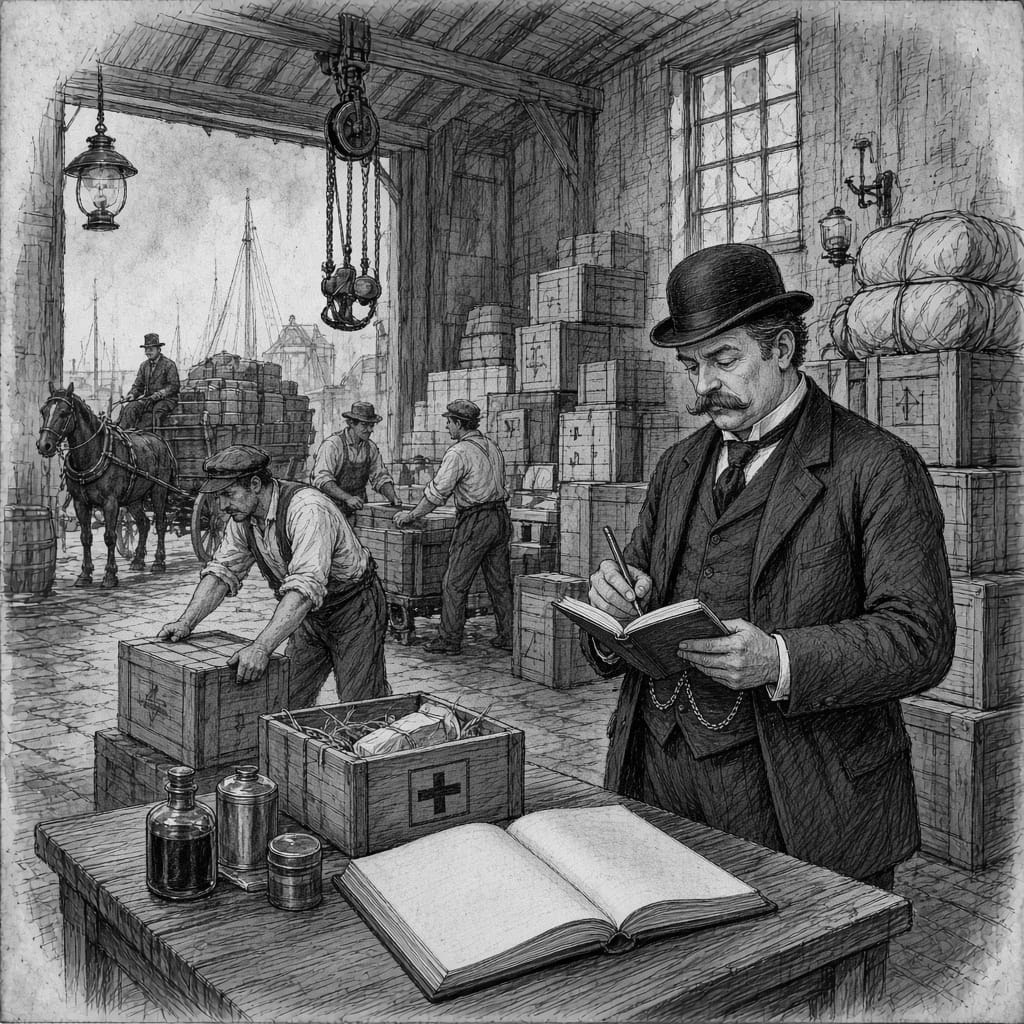
I have seen this movie before, and let me save you an afternoon. Vendors are marching into healthcare warehouses with software that promises to forecast inventory using artificial intelligence. They claim they can optimize your hospital's loading dock with a digital brain. The hiring managers I talk to are completely unimpressed. They do not want a spaceship commander. They want someone who can read a well-kept ledger and ensure the temperature probe in the freezer did not blink on a Sunday.
If you are looking for an operations and supply chain role in healthcare or life sciences, you need to understand what employers are actually buying right now. They are not buying visionaries to disrupt their throughput. They are buying enforcers to protect them from federal regulators.
The Ledger Always Beats the Algorithm
The labor market for these roles is grounded in strict rules, not creative logistics. The Bureau of Labor Statistics occupational data for logisticians, from the federal agency that tracks employment trends and wages, defines logisticians as the workers who analyze and coordinate an organization's supply chain. In retail, a logistician might be judged purely on speed and cost. In healthcare, speed and cost mean nothing if the product is ruined or illegal by the time it reaches the patient.
That brings us to the Drug Supply Chain Security Act, or DSCSA. This is a federal law giving the U.S. Food and Drug Administration (FDA) the authority to protect the nation's drug supply from counterfeit, stolen, or contaminated products. The mandate requires supply chain trading partners, such as manufacturers, wholesale distributors, and pharmacies, to trace prescription drugs electronically at the individual package level.
This is not a suggestion; it is a legal requirement. The FDA implementation of DSCSA requirements dictates an interoperable, electronic system so that hospitals and pharmacies can identify and trace certain prescription drugs as they move from the factory to the loading dock. "Interoperable" just means that everyone's computer systems must be able to securely talk to each other to prove where a box came from. If a shipment arrives and its electronic paperwork does not perfectly match the physical packages, the drugs cannot be dispensed. The throughput grinds to a halt.
Selling Compliance Over Creativity
Here at PorkiMail, we have watched this compliance shift rewrite operations job descriptions across the sector. Your leverage as a job seeker depends entirely on managing this friction. When you interview for an operations manager role at a pharmaceutical distributor or a hospital network, the employer is terrified of a compliance failure. They need to know you can manage the rigid documentation the government demands.
Interestingly, the FDA DSCSA product tracing requirements apply specifically to human prescription drugs in finished dosage form, while excluding items like over-the-counter drugs, animal drugs, and medical gases. If you know the difference between what requires strict package-level tracking and what can move through a standard inventory channel, you instantly prove your value to a hiring manager protecting a tight budget.
The Physics of the Cold Chain
Then there is the physical reality of the product itself. Throughput in life sciences is largely dictated by the cold chain. A cold chain is simply a temperature-controlled supply chain designed to keep vaccines, biologics, and other sensitive medicines within a strict temperature range from the moment they are manufactured until they are administered to a patient.
The Centers for Disease Control and Prevention Vaccine Storage and Handling Toolkit sets strict guidelines for this temperature monitoring. The national public health agency requires facilities to track their storage units using digital data loggers that continuously record the temperature. If a unit gets too warm or too cold (an event the industry calls a temperature excursion) the medicines might lose their potency and have to be destroyed.
This is where the employer's profit margin evaporates. I have watched operations directors lose sleep not over delayed shipments, but over a single failing compressor in a specialized freezer. Employers are filtering the hiring funnel for candidates who know how to set up standard operating procedures, maintain redundant temperature sensors, and train staff to never, ever leave a door open.
Enforce the Standard
A healthcare supply chain is not a spaceship hurtling into a frictionless future. It is a massive, heavily guarded filing cabinet on a shop floor. Everything must be labeled, logged, and verified. If a vendor tries to sell you software that guesses what you might need next month, smile and show them the door. Your job is to know exactly what is sitting on the shelf today, where it came from, and what temperature it is right now.
My advice to you is to stop talking about your ability to brainstorm and start talking about your ability to enforce standards. Before your next interview, look up the specific FDA and CDC compliance guidelines for the type of facility you want to join. When it is your turn to ask questions, ask the hiring manager how their team handled their last temperature excursion or DSCSA data mismatch. You will immediately sound like a colleague rather than an applicant.