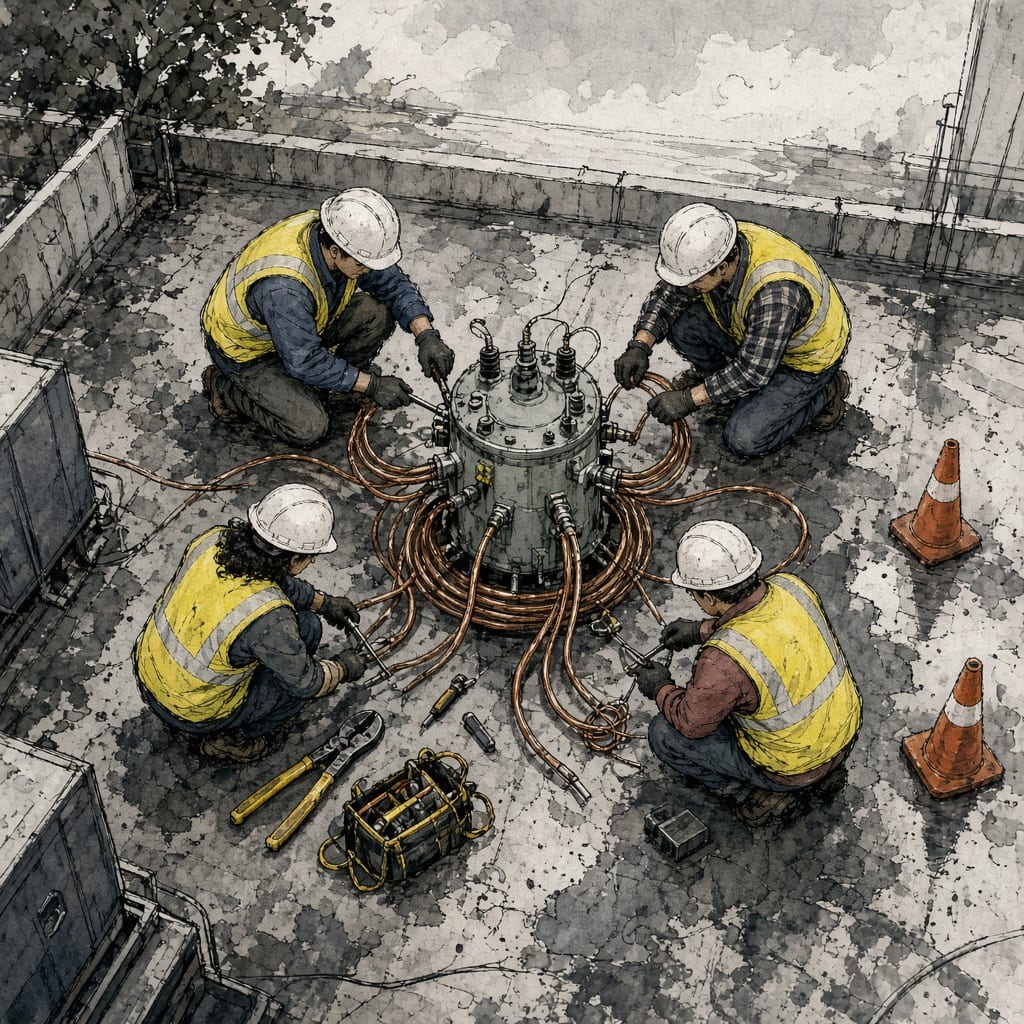
If you have spent any time looking for a job this year, someone has probably told you to buy a prompt engineering certificate. I have seen this movie before. The evangelists insist the future is a chatbot, and the career vendors are happy to sell you the roadmap. Let me save you an afternoon. While they argue over software, the physical power grid is screaming for labor, and the funding rules to get you there just changed.
Over the last 30 days, Google searches for "does fafsa cover trade school" broke out across the United States. Job seekers are scrambling to figure out if they can use federal student aid to pay for a vocational certificate while they are out of work. The answer is yes, and the timing is no accident.
The FAFSA Window and the Workforce Pell Rule
If you are wondering why the FAFSA question is suddenly everywhere, you are watching two federal events collide.
First, the 2027 to 2028 Free Application for Federal Student Aid (FAFSA) opened on October 1, 2026. Job seekers are applying now to establish their financial need for the coming academic year.
Second, and more importantly, the Department of Education launched the Workforce Pell grant program on July 1, 2026. Before this summer, you typically had to enroll in a long degree program to get a Pell Grant, which is federal student aid that does not have to be repaid. Now, short programs lasting 8 to 15 weeks qualify for federal grant money. This means pre-apprenticeships, commercial driving courses, and electrical certificates finally made the cut, so long as the school is approved.
The Economics of the Electrical Trades
Why look at the electrical trades instead of another tech credential? Let us check the well-kept ledger at the Bureau of Labor Statistics.
The median annual wage for electricians was $63,190 in May 2025. That median figure means half of all electricians made more than that amount, and half made less. If you are willing to climb, the numbers get louder. The median annual wage for electrical power-line installers and repairers hit $95,320.
This is not a clean desk job. It is hard, physical work on the shop floor, down in the mud, and out in the weather. Burnout is physical, not mental. But massive data center buildouts and an aging national power grid have left employers starved for people who actually know how to bend conduit and pull wire. When the demand outpaces the supply of workers, you hold the bargaining leverage. Here at PorkiMail, we like to point out when the market tilts in your favor.
How WIOA Training Accounts Cover the Gap
Even a short electrical program costs money, and an unemployed worker rarely has a spare checking account lying around to cover tuition. This is where older tools come in handy.
In addition to the new Workforce Pell Grants, you can tap into the Workforce Innovation and Opportunity Act (WIOA). WIOA is a federal law that funds local workforce development boards to help retrain displaced workers. These local boards use Individual Training Accounts to pay for allowable occupational skills training, provided the school is on the state approved list.
Most workforce boards cap these training accounts between $4,000 and $10,000, depending on where you live. If you apply and qualify, this grant money can cover your classroom instruction, your OSHA safety cards, and the expensive hand tools required to walk onto a job site. Between WIOA and Workforce Pell, public money will often cover the entire cost of your ticket into the trade.
The Apprenticeship Reality
Do not mistake the certificate for the finish line. A short electrical program does not make you a journeyman electrician. It simply buys you a competitive ticket to a registered apprenticeship.
Once you are in, you face four to five years of earning while you learn. You will start as an apprentice making a fraction of the journeyman rate, hauling materials and doing the grunt work. The difference is that you are paid for those hours, not paying tuition. As your skills increase on the job, your wage increases on a predictable, negotiated schedule until you test for your license.
Your Next Move
Stop agonizing over the keywords in your resume. Your leverage lives in a hard hat, not a PDF. My advice to you is to locate your nearest American Job Center this week. Ask the front desk staff about their WIOA training account limits and ask for a copy of the state Eligible Training Provider List. Check which local electrical pre-apprenticeships are approved for Workforce Pell. Calculate the math for yourself, and leave the chatbots to the evangelists.