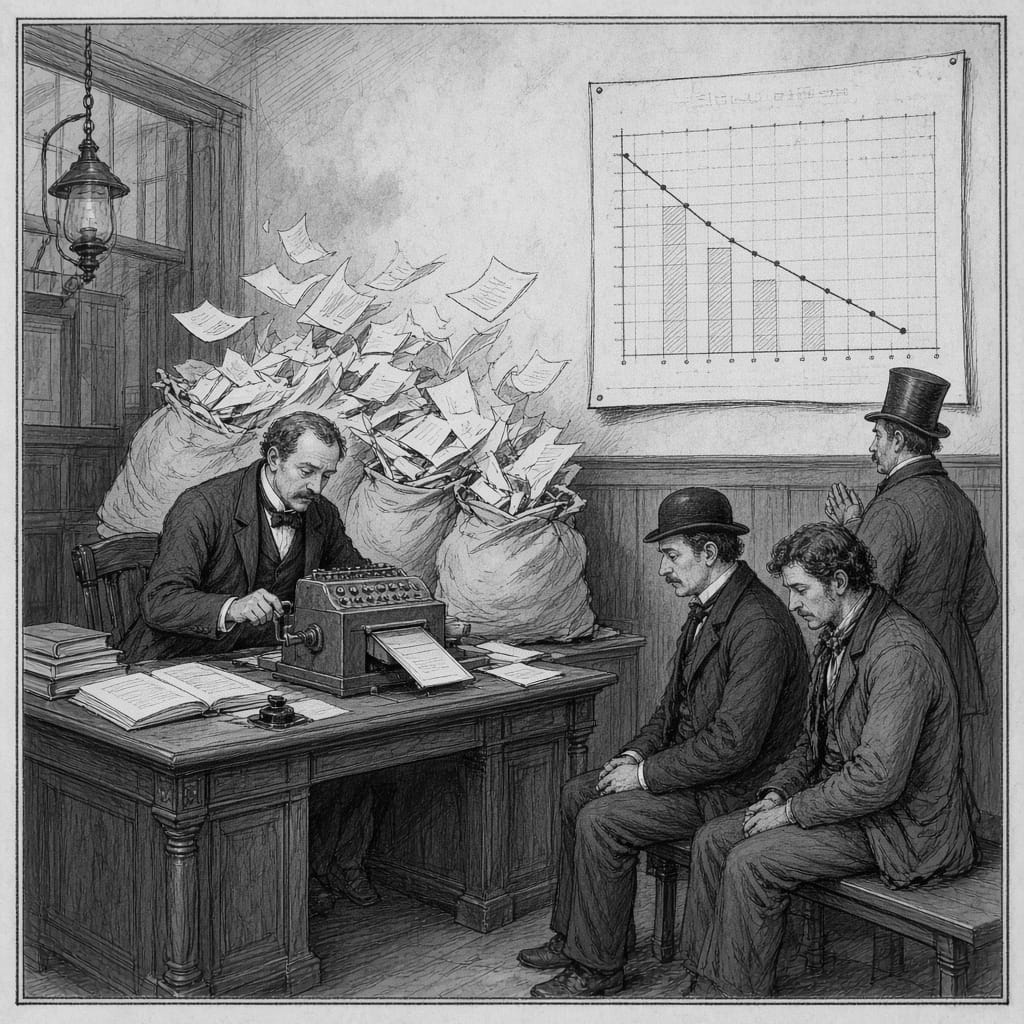
I pulled the filing. The vendor copy says artificial intelligence is doing the heavy lifting for modern sales teams, automatically generating leads so human workers can just sit back and close deals. The documentation says those leads are a mirage, and the actual workers are burning out while chasing them.
Sales technology vendors are selling automated outreach tools by promising endless pipeline, which is the total list of potential deals currently in progress. They claim software can instantly identify prospects, draft emails, and book meetings at scale. But if you look at the labor data and talk to the people doing the work, the math does not survive contact with reality.
The mathematics of missed targets
Let us look at the actual revenue targets. According to Salesforce's sixth State of Sales report, 67 percent of sales professionals do not expect to meet their quota. A quota is the mandatory revenue target a sales representative is required to close in a given period. When two-thirds of the workforce is missing the mark, it is not an individual performance problem. It is a structural failure in how the role is designed.
Employers are loading up on software tools, assuming more technology equals more revenue. The reality on the floor is that human workers are drowning in administrative tasks. GetAccept's 2026 sales productivity guide notes that sales representatives spend only 28 percent of their time actually selling. The rest disappears into updating CRM platforms, meaning the customer relationship management databases used to track activity, along with internal meetings, forecasting, and formatting proposals.
Follow the software incentive
Who gets paid if you believe the automated-pipeline dream? The software vendors charging per seat for outbound email tools and data scrapers. They secure their recurring revenue whether the leads convert or not. Who loses? The frontline sales representative who is handed a bloated list of unqualified prospects and then blamed when those prospects do not buy.
We can see the drag clearly in the closure metrics. A 2026 benchmark study by Landbase shows the average B2B win rate is roughly 21 percent for all opportunities. B2B stands for business-to-business, meaning companies that sell complex products to other companies rather than individual consumers. Win rate is the percentage of pursued deals that actually end in a closed sale. That means nearly 80 percent of the time, the representative is working a deal that yields zero commission. In this industry, a bloated pipeline is worse than an empty one. It consumes expensive human hours to process inevitable rejections.
Take an illustrative worker, say a software sales representative named Julian. Julian's employer buys an automated tool that floods his calendar with initial meetings. But because the software cannot qualify whether the buyer actually has a budget, Julian spends 40 hours a week conducting product demonstrations for people who will never purchase. His base salary stays the same, his commission checks dry up, and the employer wonders why the sales cycle is stalling.
Buyers retreat to the shadows
The buyer side is actively retreating from these automated approaches. Corporate buyers are exhausted by the endless automated emails and unsolicited social media messages. Gartner's sales pipeline management guide points out that 75 percent of B2B buyers now prefer a rep-free experience for their research. They want to read the technical specifications, watch the product video, and check the pricing page without being forced onto a discovery call. They only want to talk to a human when the software cannot answer their highly specific structural questions.
So, what are employers actually paying for if buyers do not want to talk to salespeople until the very end of the process? They are paying for risk management, consensus building, and the final human judgment that software simply cannot provide.
Where the premium pay actually lives
The Bureau of Labor Statistics' Occupational Outlook Handbook reports that the 2025 median pay for wholesale and manufacturing sales representatives was $76,460. Median pay means half of the workers earned more than that amount and half earned less. The premium salaries in this field are not going to representatives who can send a thousand automated emails. Here at PorkiMail, we see employers reserving top compensation for the people who can untangle a stalled enterprise deal involving a dozen anxious executives across legal, finance, and engineering departments.
The economics of the role are splitting. At the bottom, junior representatives are being turned into human spam filters, frantically trying to qualify garbage leads generated by algorithms. Those jobs feature high burnout, flat wages, and missed targets. At the top, senior business development professionals are operating more like project managers, coordinating the final, complex human interactions needed to get a six-figure contract signed.
My advice to you, if you are navigating this job market, is to ignore the volume metrics. Do not boast about how many cold calls you can make in a day or how many automated sequences you can launch. The market for pure outreach is being aggressively commoditized by software. The vendors will keep selling volume to executives who want an easy fix. Focus your next career move on how you curate pipeline quality and navigate complex human buying committees. Your job is to provide the revenue evidence that algorithms cannot fake.