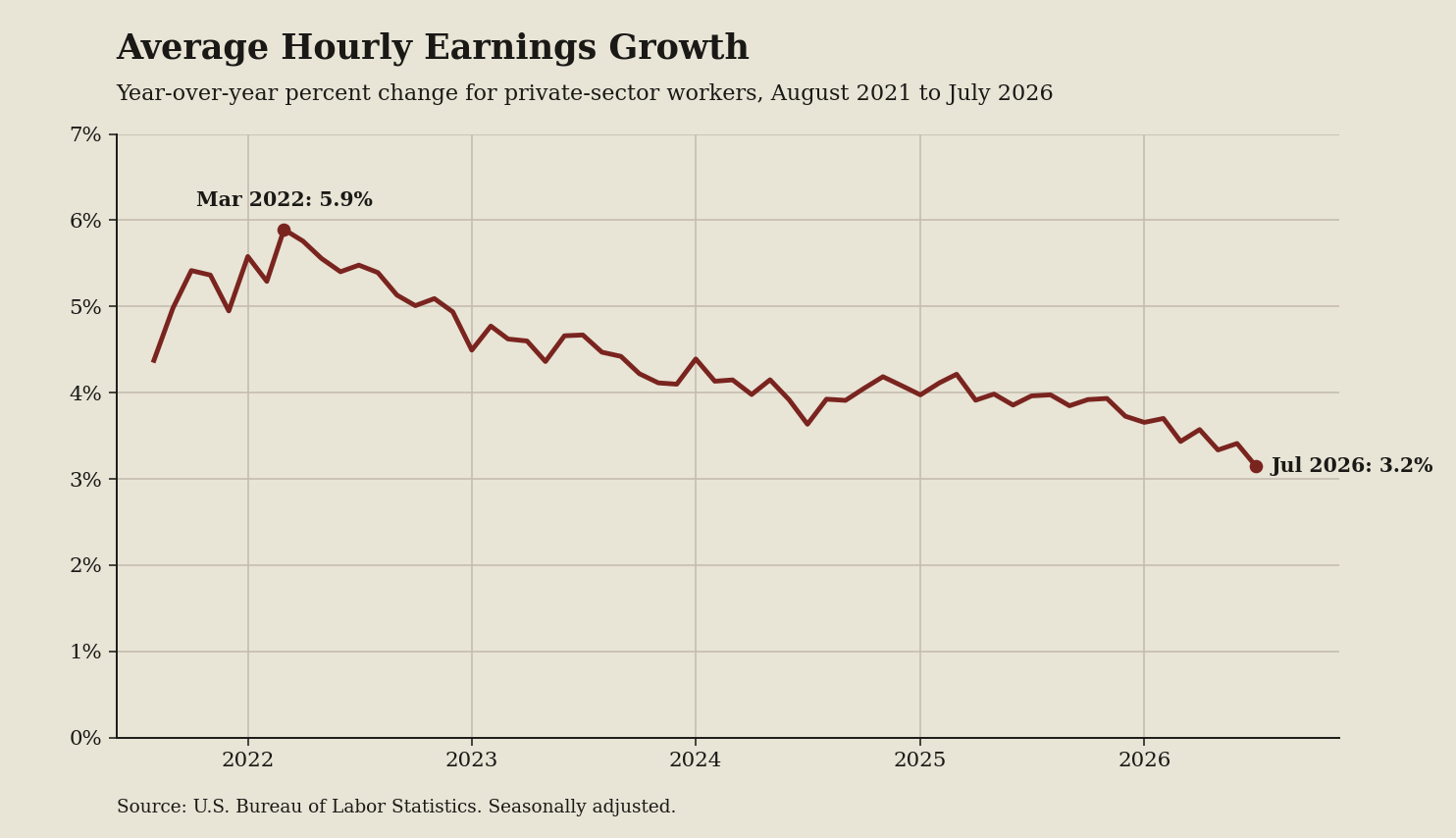
I pulled the file from the Current Employment Statistics program. Vendor copy promises a candidate's market, but who profits from that spin? Recruiters do. The official July release shows average hourly earnings cooled to a 3.2 percent year-over-year gain, proving employers are hoarding the cash. This is an aggregate paycheck, not a raise you can spend yet.
Key takeaways
- The timeline covers 60 months: The dark red line fell from 4.4 in August 2021 to 3.2 percent, erasing easy premiums.
- The peak is long gone: The series hit a high of 5.9 percent in March 2022, confirming your pandemic-era leverage has evaporated.
- The trend points down: Over four readings, the line dropped from 3.6 to a 3.2 percent low, signaling weaker demand.
What the terms mean
- the Current Employment Statistics program: The government survey of business establishments providing these payroll numbers.
- Average hourly earnings: A gross measure of worker pay before benefits, maintained in a public federal database.
- Year over year: A comparison to the same month last year, via the official dashboard, removes seasonal noise.
What to watch next
Cooling year-over-year pay with a flat workweek is a strict demand signal, not a lifestyle essay on remote work.