The Collapse of the Headcount Pyramid
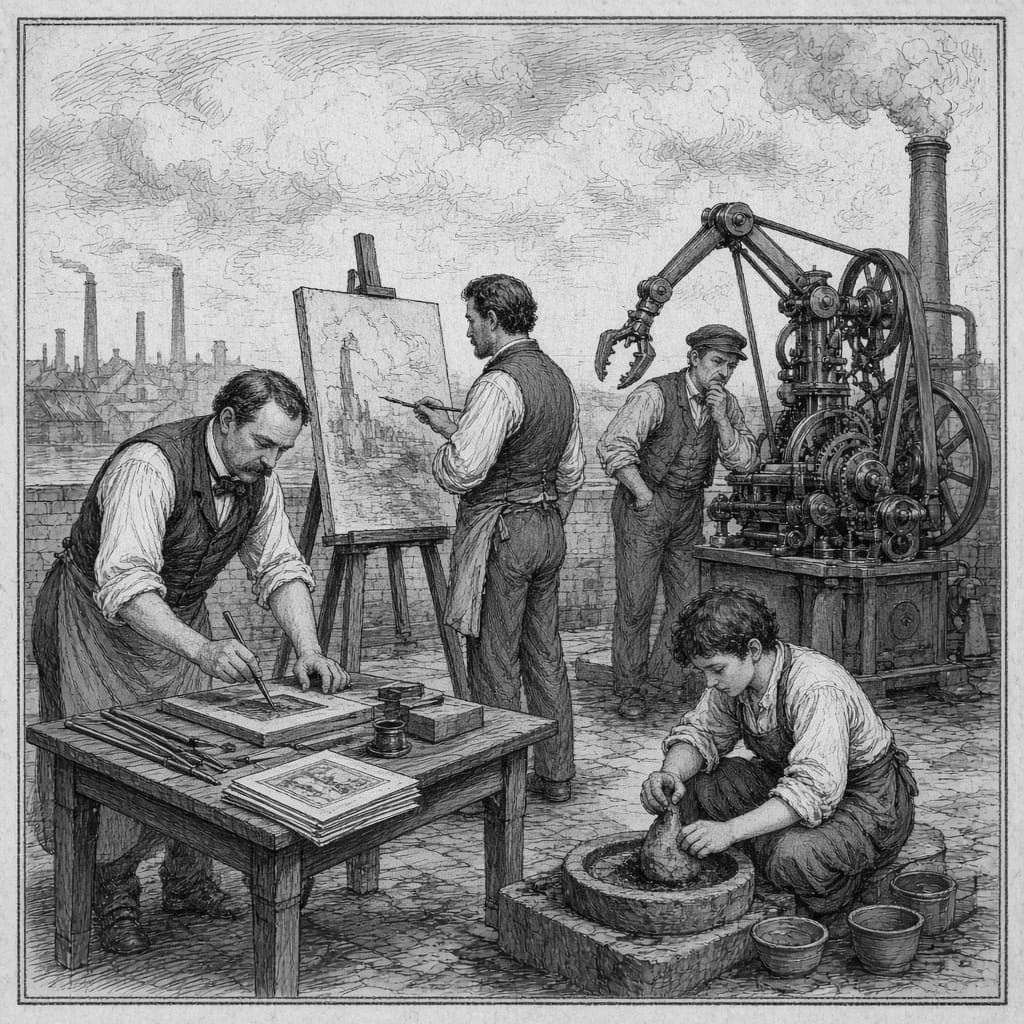
I have signed the requisitions for corporate creative departments, and I can tell you exactly how the budget used to work. In the past, the headcount was built like a pyramid. You had one art director at the top, supported by a broad base of junior graphic designers grinding through localized banners, social media posts, and email headers. That pyramid is flattening. The generative software tools employers are buying today are specifically designed to absorb the sheer volume of basic asset variations. When the enterprise vendor promises the finance department that they can automate asset production, the hiring manager's budget line for junior designers gets permanently erased. Employers refuse to carry payroll for tasks that software now includes in the base enterprise license.
The Labor Data Exposes the Split
You do not need to guess where the employer leverage is moving, because the federal data shows the exact divergence. According to the Bureau of Labor Statistics Occupational Outlook Handbook, the median annual wage for all arts and design occupations (the exact midpoint where half of the workers earned more and half earned less) was $58,240 in 2025. The overall group is projected to grow slower than the national average.
Look underneath that blended number at the individual roles. The Bureau of Labor Statistics projects graphic designer employment to decline by 2 percent from 2025 to 2035, while paying a median wage of $62,960. Meanwhile, Bureau of Labor Statistics data for art directors projects growth of 4 percent over the same decade, commanding a median wage of $114,850. (Industrial designers tracked by the Bureau of Labor Statistics, who combine art with engineering to develop physical manufactured products, have a slightly different trajectory with 2 percent projected growth, but the digital side is ruthless.) The payroll money is moving from the bottom of the pyramid to the top.
The Premium for Brand Enforcement
The gap between a declining role and a growing, six-figure role is the entire story of your labor market. Graphic design, at least as a pure production function, is increasingly being treated as a solved problem. Look at the product pages for Adobe Firefly Enterprise Solutions, which explicitly pitches employers on turning asset variant production to full automation. If your main selling point in an interview is how quickly you can resize a marketing layout for fourteen different digital platforms, you are competing against a machine that does it instantly without asking for a lunch break.
What employers actually want to pay for now is risk management and brand enforcement. The automated pipeline can generate fifty iterations of a product mockup in seconds. However, the software does not know if iteration number twelve violates a core corporate brand guideline or hallucinates a product feature that will trigger a costly false advertising claim from a competitor. The person who gets the job offer is the one who can oversee the output, reject the liabilities, and protect the company's legal and visual integrity. The employer pays the premium for the enforcer, not the producer.
What the Panel Actually Debriefs
I have sat in the panel debrief after a creative candidate leaves the room. The hiring manager is never worried about whether the candidate knows the keyboard shortcuts for their layout software. They are worried about whether this person can take a vague marketing objective from the sales department, build a system that standardizes the campaign's look, and enforce the corporate rules across a remote team of contractors. We see this shift constantly in the labor data we track here at PorkiMail. Employers want someone who owns the entire output system, not just the individual files.
When the panel reviews your interview, they are looking for business acumen. They want to know if you understand that design is a cost center, and that your job is to maximize the revenue impact of that cost center. A candidate who talks about managing vendor guidelines and auditing automated output sounds like a business partner. A candidate who only talks about making things look nice sounds like an expense.
Your Move This Week
Stop positioning yourself as a human assembly line. If you are interviewing for creative roles this week, you need to change your angle of attack. Do not tell the hiring manager how many individual assets you produced in your last role. Tell them how you audited a campaign for brand consistency, how you set the visual rules for an external vendor, or how you managed the output of automated tools to increase campaign speed without breaking the corporate guidelines. The question you must answer for the employer is simple: are you selling the asset, or are you selling the judgment that controls it?